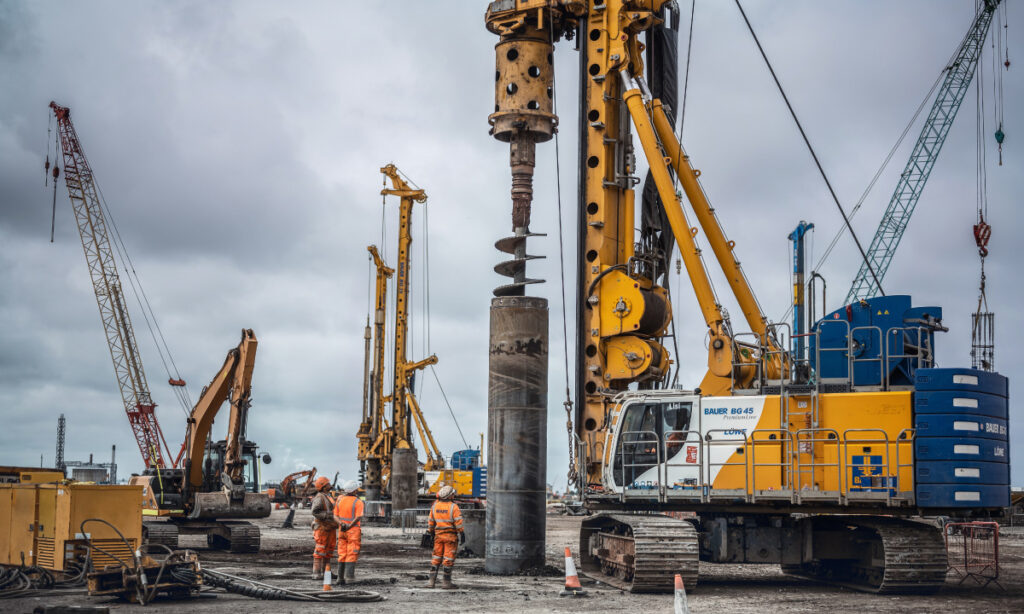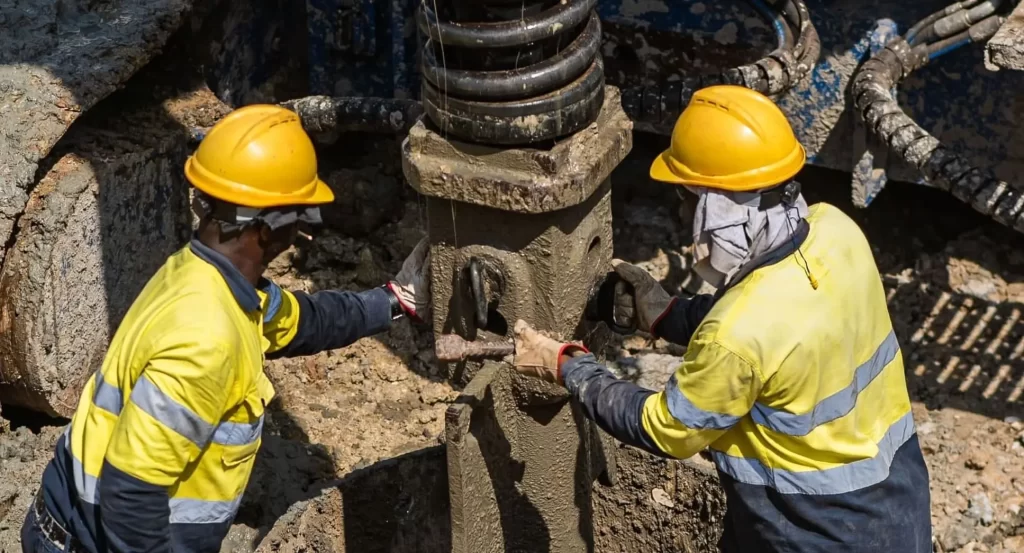
Every major structure depends on what lies beneath it. Whether it is a highway bridge, a high-rise commercial tower, or a power generation facility, structural integrity begins with engineered foundations. As infrastructure development accelerates nationwide, piling in Ghana has become a critical discipline in ensuring safety, durability, and long-term stability.
Deep foundation engineering is not simply drilling into the ground. It is a precise geotechnical process that responds to soil conditions, load requirements, groundwater levels, and structural design constraints.
Understanding Ghana’s Ground Conditions
Ghana presents diverse geotechnical challenges – from coastal soft clays and high groundwater tables to lateritic soils and rock strata inland. These conditions make shallow foundations insufficient for many large-scale projects.
Deep foundation systems transfer structural loads to stable soil or rock layers, ensuring:
- Settlement control
- Resistance to lateral forces
- Load-bearing reliability
- Long-term structural resilience
This is especially critical for bridges and marine infrastructure exposed to dynamic forces and environmental stress.
Types of Piling Systems Used in Ghana
Professional deep foundation contractors apply different piling methods depending on project requirements.
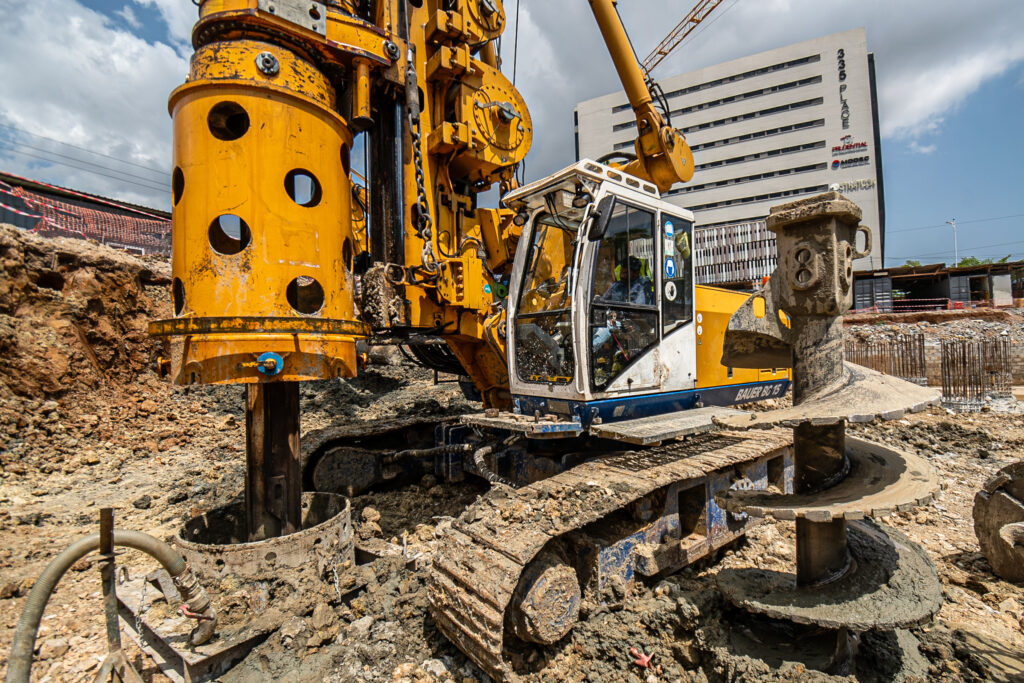
Bored piles are commonly used for high-rise buildings and bridge piers, offering strong load capacity and adaptability to complex soil conditions.
Continuous Flight Auger (CFA) piles are efficient in urban environments where reduced vibration is necessary.
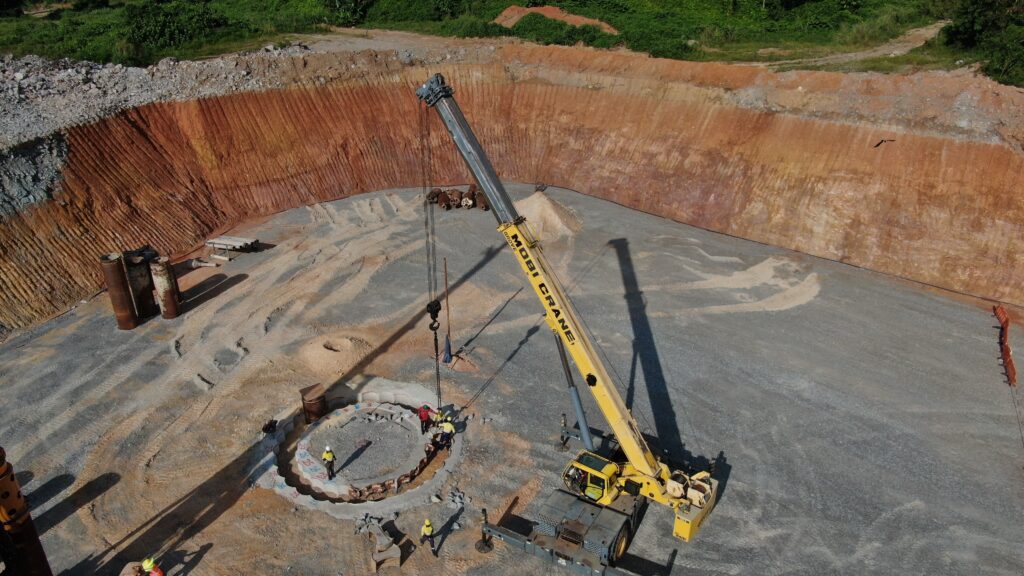
Secant pile walls provide excavation support and are frequently deployed for underground structures and shaft construction.
For coastal and energy projects, marine and near-shore piling systems ensure structural stability in challenging environments.
Bridge Foundation Works in Ghana
Bridge construction introduces additional engineering complexity. Heavy dynamic loads, floodplain conditions, and variable soil layers require detailed geotechnical investigations and precision execution.
Bridge foundation works in Ghana typically involve:
- Borehole analysis and soil testing
- Load testing and reinforcement design
- Precision drilling operations
- Structural concrete integrity testing
The engineering behind bridge foundations determines not only structural performance but public safety and long-term maintenance costs
Advanced Equipment and Technical Expertise
Modern piling in Ghana depends on specialized rigs, in-house drilling capability, and experienced geotechnical engineers. The integration of international engineering standards with local soil expertise ensures reliable and efficient project execution.
Advanced monitoring systems further enhance precision, ensuring alignment with design specifications and minimizing construction risk.
Sustainable Foundation Engineering
Environmental responsibility is increasingly important in foundation construction. Sustainable piling practices include controlled excavation methods, groundwater management, soil preservation, and waste reduction strategies.
Responsible engineering protects surrounding communities while delivering structurally sound results.
Conclusion
As Ghana continues investing in bridges, highways, power plants, and commercial developments, the importance of technically advanced piling in Ghana will only increase.
Deep foundation engineering is the unseen backbone of infrastructure growth, combining geotechnical science, precision machinery, and disciplined execution to support the nation’s most critical structures.
Explore Our Deep Foundation Expertise
From bridge foundation works in Ghana to complex marine and industrial piling systems, our projects demonstrate the precision and technical depth behind every structure we support. Review our portfolio to understand how engineered foundations enable national infrastructure.