Every major structure depends on a strong and reliable foundation. Buildings, bridges, industrial plants, and infrastructure projects all require foundations that can safely transfer structural loads into the ground. This is where deep foundation engineering becomes essential.
When soil conditions near the surface are not strong enough to support heavy loads, engineers turn to deep foundation systems such as piles and drilled shafts. These systems transfer loads deeper into the ground where stronger soil or rock layers can provide the necessary support.
Understanding Ground Conditions
Before any deep foundation system is designed, engineers must carefully study the ground conditions at the project site. Soil properties can vary significantly depending on location, depth, and geological history.
Geotechnical investigations help engineers understand factors such as soil strength, groundwater levels, and potential settlement risks. These studies form the basis for selecting the most appropriate foundation solution for each project.
In many regions, especially in coastal or soft soil environments, deep foundations are the most reliable method for supporting large structures.
Common Types of Deep Foundations
Several deep foundation methods are widely used in infrastructure and construction projects.
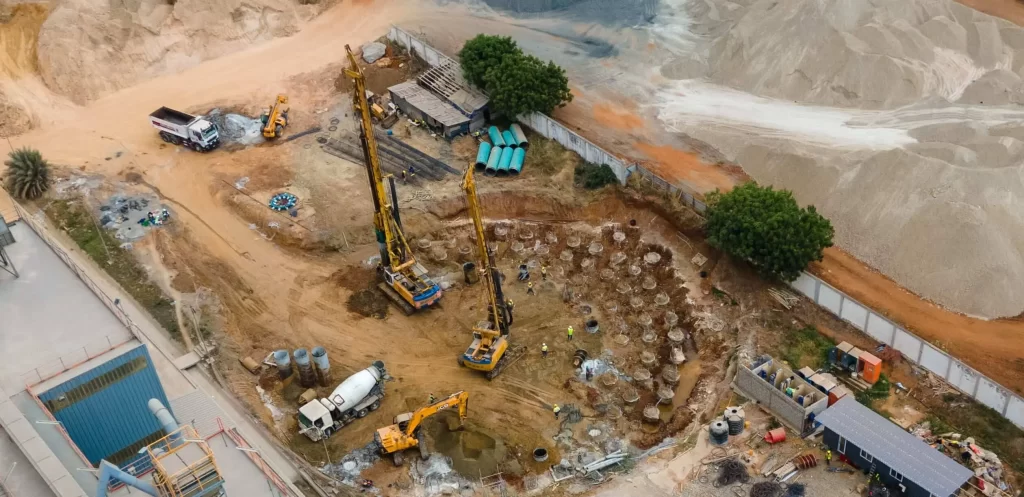
One of the most common solutions is bored piling, where cylindrical shafts are drilled into the ground and then filled with reinforced concrete. This method is particularly effective for supporting heavy loads and is often used in large buildings, bridges, and industrial facilities.
Another widely used approach is driven piles, where prefabricated piles are driven into the ground using specialized equipment. These piles transfer structural loads through friction along the pile shaft and resistance at the pile base.
The choice between different foundation systems depends on soil conditions, structural requirements, and construction constraints.
Supporting Critical Infrastructure
Deep foundation engineering is especially important for projects where structural stability is critical. Bridges, high rise buildings, and industrial facilities must withstand heavy loads as well as environmental forces such as wind, vibration, and water pressure.
A properly designed deep foundation system ensures that these forces are safely transferred into the ground. This prevents excessive settlement and protects the long term integrity of the structure.
In complex infrastructure projects, foundation engineering often represents one of the most technically demanding phases of construction.
Precision and Expertise in Foundation Work
Executing deep foundation works requires specialized equipment, experienced engineers, and strict quality control procedures.
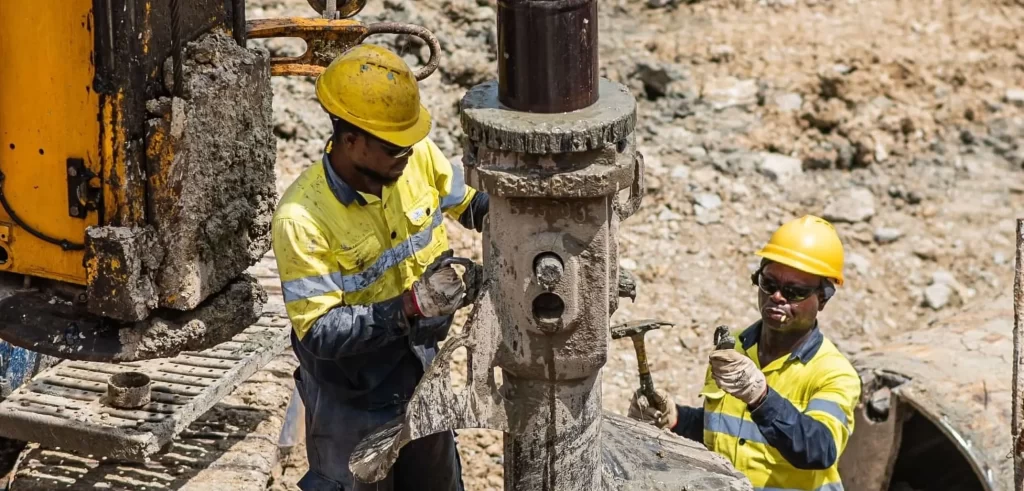
During installation, engineers monitor factors such as drilling depth, soil conditions, reinforcement placement, and concrete quality. These controls ensure that each pile or foundation element meets the required design specifications.
Even small deviations during foundation construction can affect the performance of the structure above. For this reason, precision and technical expertise are essential throughout the process.
Foundations That Support Long Term Performance
Although foundations are rarely visible once construction is complete, they play one of the most important roles in any project. A well designed and properly constructed foundation allows buildings and infrastructure to perform safely for decades.
As construction projects continue to grow in scale and complexity, deep foundation engineering will remain a critical discipline within modern infrastructure development.